The Planets in Astrology
In astrology, planets are the actors in your cosmic story. Each celestial body represents a different drive, need, or function of your psyche. Understanding the planets is essential to reading any birth chart.
See Your Planets→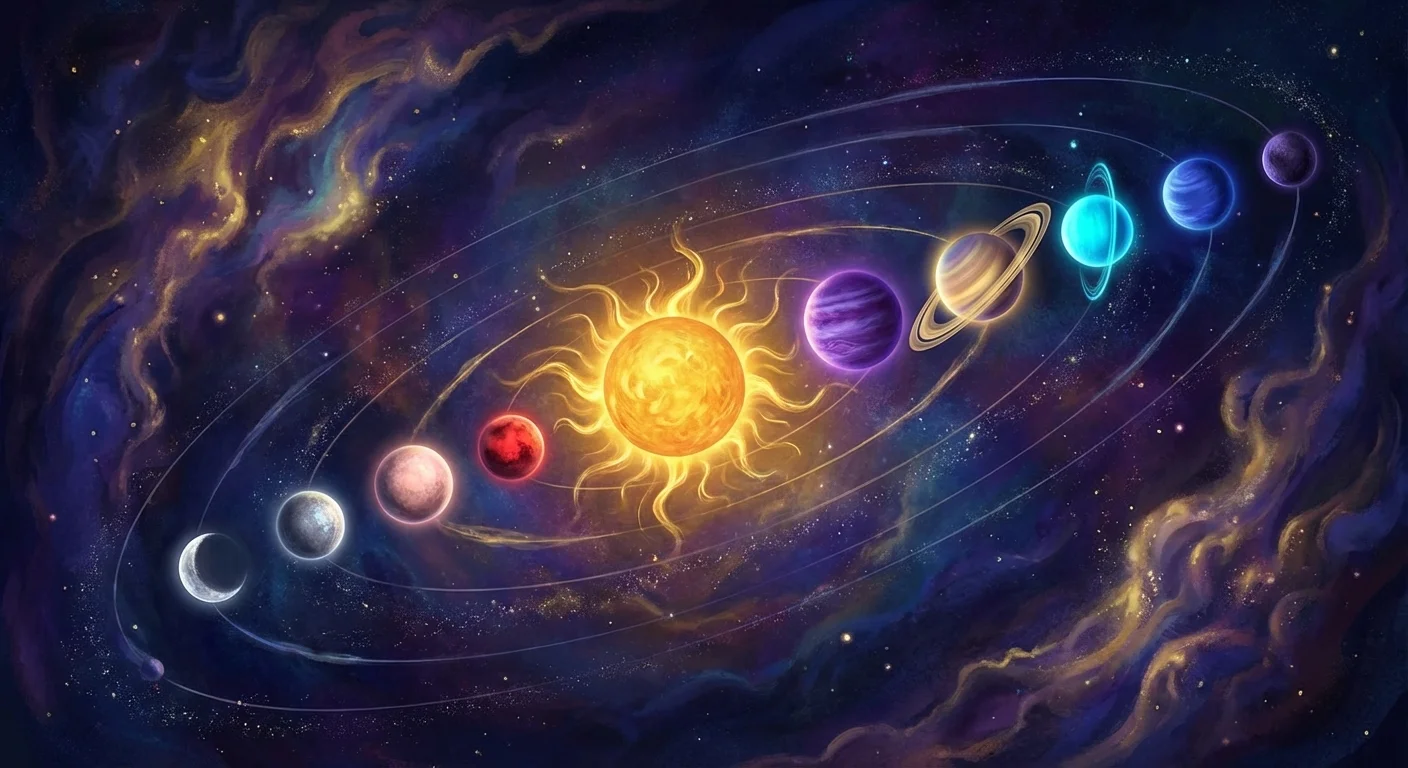
Personal Planets
The inner planets that shape your personality and daily life
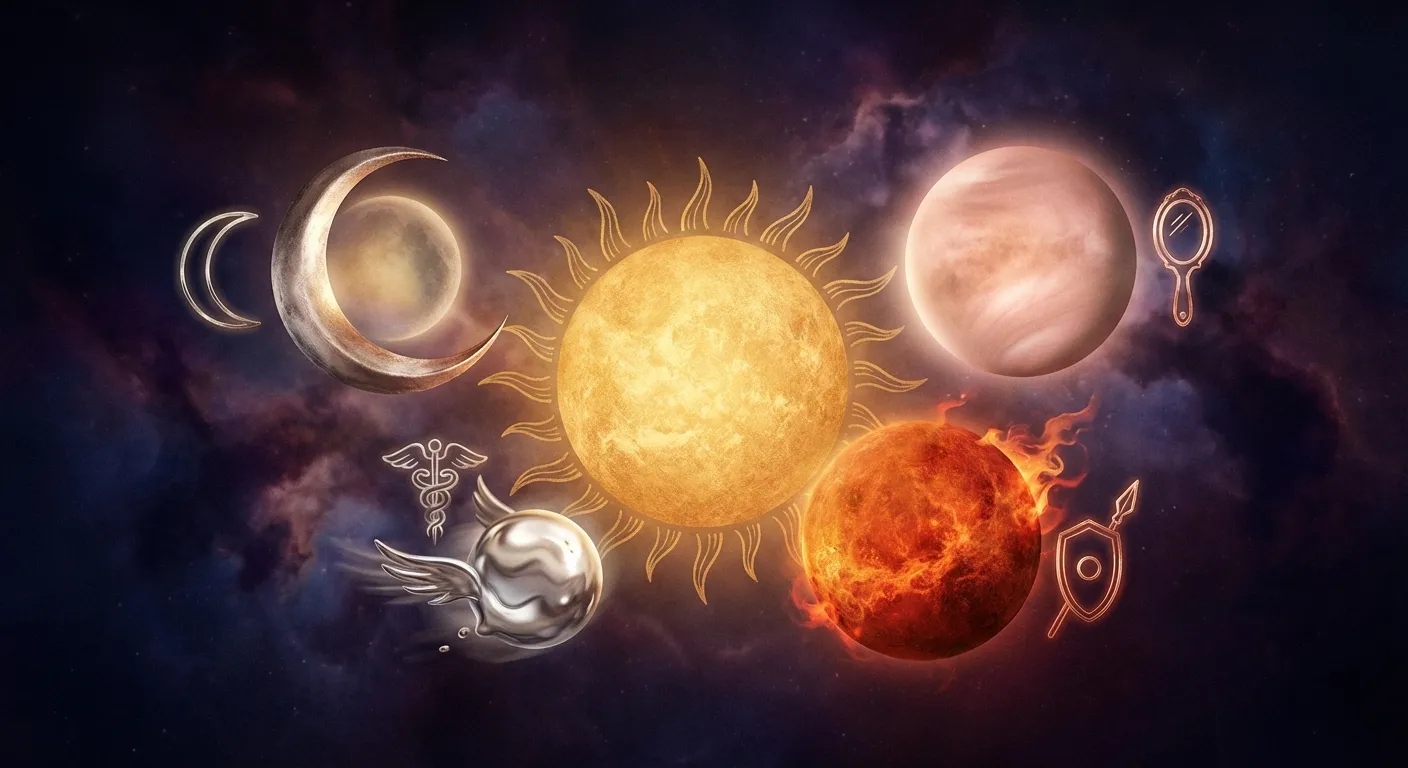
The personal planets move quickly through the zodiac, spending days to weeks in each sign. They represent the most individual, day-to-day aspects of your personality—how you think, feel, love, and act.
Sun
Identity • Ego • Vitality • Purpose
The Sun represents your core essence—who you are at your deepest level. It's your conscious self, your life force, and your sense of purpose. The sign your Sun occupies colors how you express your individuality and pursue your goals.
Jungian Perspective: In Jungian terms, the Sun represents the ego and the conscious self. It's the center of your psychological solar system, the "I" that you identify with. A well-integrated Sun leads to healthy self-expression and authentic living.
Moon
Emotions • Instincts • Nurturing • Memory
The Moon governs your emotional nature, subconscious patterns, and instinctual responses. It reveals how you process feelings, what makes you feel secure, and how you nurture yourself and others.
Jungian Perspective: The Moon corresponds to the personal unconscious and the anima/animus in Jungian psychology. It represents your inner child, early conditioning, and the emotional patterns inherited from your mother or primary caregiver.
Mercury
Communication • Thinking • Learning • Perception
Mercury rules how you think, learn, and communicate. It governs your mental processes, writing and speaking style, and how you gather and process information. It also rules short trips and daily interactions.
Jungian Perspective: Mercury represents the intellect and the way we organize our thoughts. In psychological terms, it's the messenger between the conscious and unconscious mind, helping us articulate and understand our inner experiences.
Venus
Love • Beauty • Values • Pleasure
Venus governs what you love, what you find beautiful, and what you value. It shows how you express affection, your aesthetic preferences, and what brings you pleasure and comfort.
Jungian Perspective: Venus represents the anima in men and relates to the feminine principle in all charts. It shows how we relate to others, seek harmony, and express our creative and receptive qualities.
Mars
Action • Desire • Courage • Anger
Mars is your drive, ambition, and assertive energy. It shows how you pursue what you want, express anger, and take action. Mars represents your physical energy, sexuality, and competitive spirit.
Jungian Perspective: Mars represents the animus in women and the active, assertive principle. It's how we defend ourselves, set boundaries, and channel our aggressive instincts constructively.
Outer Planets
Generational forces of transformation
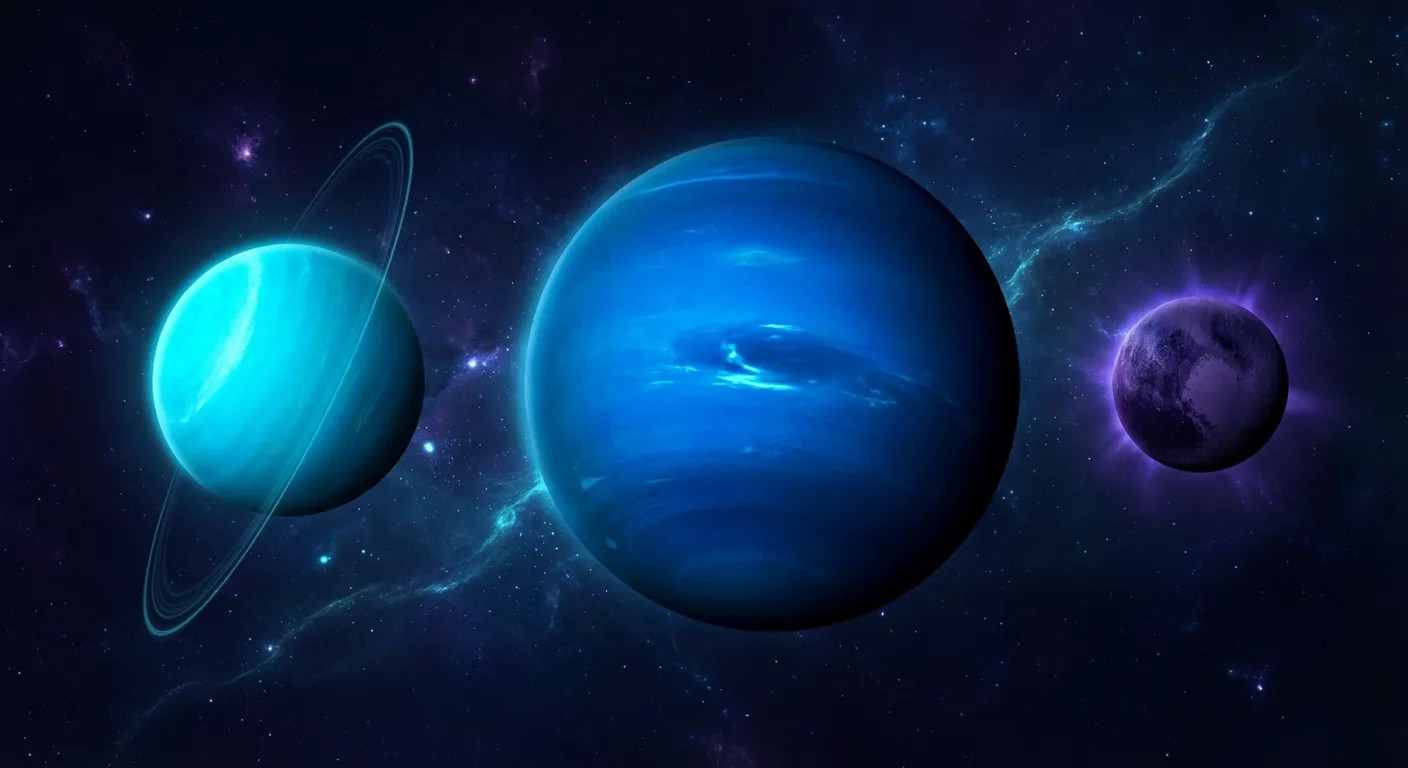
The outer planets move so slowly that entire generations share the same sign placement. They represent collective, transpersonal forces that catalyze deep transformation. Their house position in your chart shows where these cosmic currents affect you personally.
Uranus
Innovation • Liberation • Awakening • Rebellion
Uranus brings sudden change, innovation, and liberation from the status quo. It shows where you're unconventional, seek freedom, and may experience unexpected breakthroughs or disruptions.
Jungian Perspective: Uranus represents the trickster archetype and the individuating impulse that breaks us free from collective conditioning. It's associated with sudden insights, genius, and the urge toward authentic self-expression.
Neptune
Dreams • Intuition • Spirituality • Illusion
Neptune dissolves boundaries between the material and spiritual. It governs dreams, imagination, artistic inspiration, and mystical experiences. It can also indicate areas of confusion or escapism.
Jungian Perspective: Neptune represents the collective unconscious and the longing to return to oceanic oneness. It's associated with compassion, transcendence, and the dissolution of ego boundaries—for better or worse.
Pluto
Transformation • Power • Death/Rebirth • Shadow
Pluto represents the process of death and rebirth—the breaking down of old structures to make way for profound renewal. It shows where you experience intensity, power struggles, and deep transformation.
Jungian Perspective: Pluto corresponds to the Shadow in Jungian psychology—the repressed aspects of self that hold tremendous power when integrated. It governs the process of psychological death and rebirth.
The Lunar Nodes
Your soul's evolutionary path
The lunar nodes aren't physical bodies but powerful mathematical points. They represent the intersection of the Moon's orbit with the ecliptic and point toward your karmic journey—where you've been and where you're meant to go.
North Node
Destiny • Growth • Life Purpose • Future
The North Node points toward your soul's evolutionary direction—qualities you're meant to develop in this lifetime. Moving toward your North Node often feels uncomfortable but leads to growth and fulfillment.
Jungian Perspective: The North Node represents the path of individuation—the qualities and experiences your psyche is reaching toward for wholeness. It's often what we most need to integrate but resist.
South Node
Past • Comfort Zone • Gifts • Release
The South Node represents innate talents and familiar patterns—possibly from past lives or early childhood. While these gifts come naturally, over-reliance on South Node qualities can limit growth.
Jungian Perspective: The South Node represents inherited psychological patterns and default behaviors. These feel comfortable but may represent an outdated self-image that needs to be transcended.
Frequently Asked Questions
What are personal planets vs outer planets?▼
Why are Jupiter and Saturn called social planets?▼
What does it mean when a planet is retrograde?▼
Are the lunar nodes actually planets?▼
Which planet is most important in my chart?▼
What about Chiron and the asteroids?▼
Discover Your Planetary Placements
Create your free natal chart and see exactly where each planet falls in your unique cosmic blueprint.
Calculate Your Free Chart→
Social Planets
The bridge between personal and collective
Jupiter and Saturn are called "social planets" because they govern how we function in society. Jupiter expands and Saturn contracts—together they regulate growth, ambition, and our relationship with tradition and authority.
Jupiter
Expansion • Wisdom • Luck • Faith
Jupiter is the planet of growth, abundance, and higher meaning. It shows where you seek expansion, what philosophical or spiritual beliefs guide you, and where fortune tends to favor you.
Jungian Perspective: Jupiter represents the quest for meaning and the religious function of the psyche. It's our capacity for hope, optimism, and seeing the larger pattern in life. It can also indicate where we may be prone to excess.
Saturn
Structure • Discipline • Karma • Mastery
Saturn represents structure, responsibility, and the lessons of time. It shows where you face challenges, need to develop discipline, and ultimately achieve mastery through persistent effort.
Jungian Perspective: Saturn corresponds to the Senex archetype—the wise old man who teaches through limitation and consequence. It represents the reality principle, boundaries, and the process of maturation.